

Too important to switch off: we make your proven systems future-proof
For companies whose core business runs on software that has grown over the years: the Windows application from 2009, the old merchandise management system, the database nobody wants to touch any more. We modernise step by step: no big bang, no interruptions and without losing processes that work.
 No big bang, no downtimeProven processes are retainedStep-by-step migration during live operationSpecialised in medium-sized businesses16 years of experience, over 75 clients, more than 327 projectsNo big bang, no downtimeProven processes are retainedStep-by-step migration during live operationSpecialised in medium-sized businesses16 years of experience, over 75 clients, more than 327 projectsNo big bang, no downtimeProven processes are retainedStep-by-step migration during live operationSpecialised in medium-sized businesses16 years of experience, over 75 clients, more than 327 projectsNo big bang, no downtimeProven processes are retainedStep-by-step migration during live operationSpecialised in medium-sized businesses16 years of experience, over 75 clients, more than 327 projectsNo big bang, no downtimeProven processes are retainedStep-by-step migration during live operationSpecialised in medium-sized businesses16 years of experience, over 75 clients, more than 327 projectsNo big bang, no downtimeProven processes are retainedStep-by-step migration during live operationSpecialised in medium-sized businesses16 years of experience, over 75 clients, more than 327 projects
The system runs, but nobody dares to touch it any more
It usually starts with a staffing question: the developer who knows the system is retiring or has resigned, or the knowledge should deliberately no longer depend on a single person. Legacy systems do not become a risk because they fail, but because nobody fully understands how they work any more. Business rules are spread across modules, the documentation lags behind, the knowledge is concentrated in a few heads. Four warning signs we find in almost every project:
What makes decision-makers hesitate before a modernisation
Too expensive, too risky, in the end just a new look: we hear these concerns in almost every initial assessment. They are justified when modernisation is approached the wrong way. That is why we take them seriously:
More than a redesign
We renew not just the interface but the foundation: architecture, data model and interfaces are built so that the system can once again be changed and extended safely. The business logic that has proven itself over the years is retained, documented and placed on a solid basis.
Compliance & security
Discontinued frameworks and old servers are a growing risk, from security gaps to the GDPR. We bring your system onto current, maintained technology: regular updates, clean access control, privacy-compliant data storage and documentation that will also stand up to an audit.
Costs under control
Keeping a legacy system running often costs more than modernising it: expensive specialist hardware, maintenance of discontinued technology, firefighting and blocked projects. We weigh the two against each other and modernise at an agile fixed price, eligible for funding of up to 80%.
What this means for your system is decided by facts, not assumptions. How we get there is shown in the next step.
How we make your system manageable again
without interrupting your operations
Our experts transfer established systems to modern architectures: step by step, predictably and without interrupting operations. For medium-sized businesses that are not looking for a migration adventure but for certainty: what only one person understands today is documented, modernised and manageable again tomorrow. With a partner who understands your business goals too, not just the technology.
Understand first, then modernise
We examine your system before anything is changed: how critical is it to the business? Where does the knowledge sit? What does continued operation cost, and what would a failure cost? The result is a documented system map, a reliable risk and cost-effectiveness assessment and a clear recommendation for the path to modernisation.
The right path for every system
Not every legacy system needs to be rebuilt, and not every one is worth keeping. We design the target architecture to fit into your system landscape, plan the migration without interrupting operations and deliver the implementation plan with a detailed calculation as an agile fixed-price contract.
Modernising during live operation
We implement while your legacy system keeps running: agile two-week sprints, first modules live after just a few weeks. Every stage is tested, migrated data is validated, and the legacy system is only switched off once the new one has proven itself. After that, we make sure no new legacy builds up.
Six effects you will notice
in your daily work straight away
Modernisation is not an end in itself. It pays off where the legacy system holds you back today: with changes, costs, security, and the question of what your company plans to do next.






Good news: the state pays up to 80%
For medium-sized companies with fewer than 250 employees, up to 80% of certain consulting and audit services are currently eligible for funding, for example through the INQA programme. Which programme applies in your case, even if your company is larger, we will clarify in the initial assessment.

After 14 years of a Windows solution: KANiO as a modern tablet app
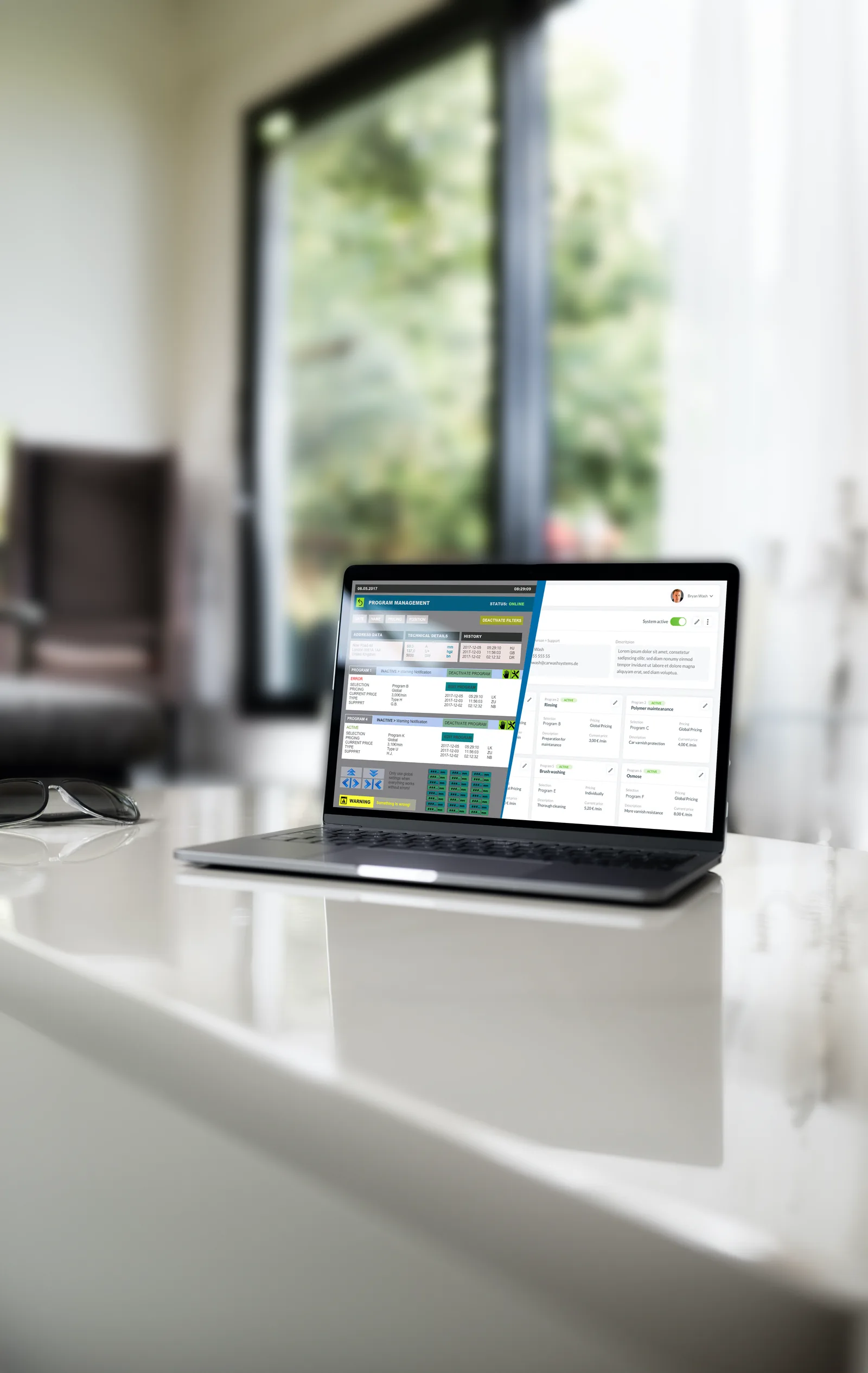
For more than a decade, HST Systemtechnik has operated KANiO, an established operations management system for the water industry. The associated Windows application for field use ran only on expensive, rugged industrial notebooks and looked outdated, which made it a barrier to entry for towns, municipalities and utilities.
Instead of a risky fresh start, Werkdigital and HST created a modern, fully offline-capable tablet app that fits seamlessly into the existing KANiO world. Maintenance and inspection orders are retrieved, processed and documented directly in the field, and synchronisation runs automatically as soon as a connection is available again.
After more than 14 years, the app replaces the original Windows solution. Utilities equip their field teams with much cheaper hardware, acceptance in the field is rising, and HST has a platform on which KANiO can continue to evolve without being held back by the hardware of the past.
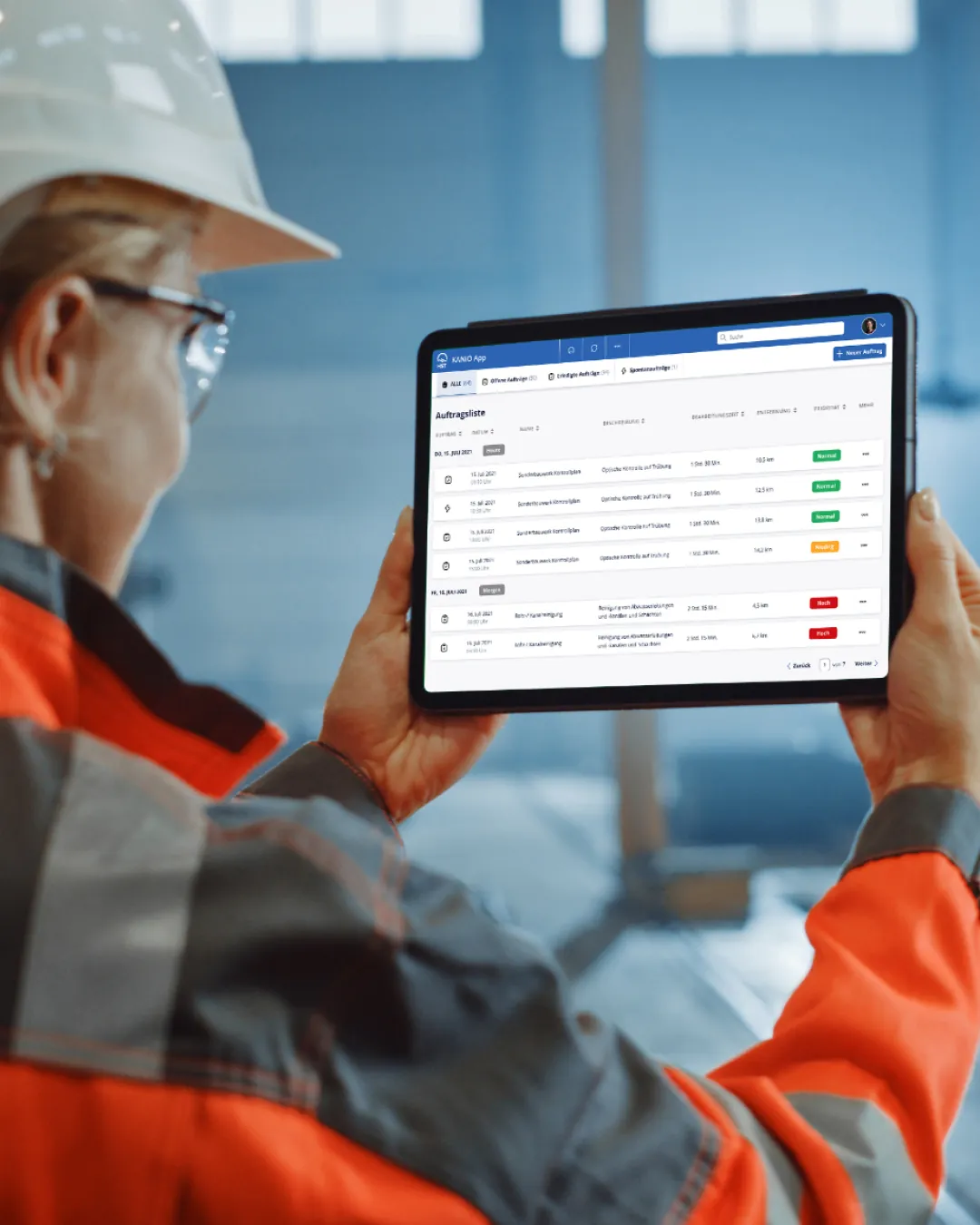 Retrieve and document orders directly on siteRecord ad hoc orders and damage without detoursOrders, data and maps available without a networkSynchronisation runs automatically once connectedRoll out, configure and secure the app centrallyLess administrative work for ITStandard tablets instead of industrial notebooksLower barrier to entry for the roll-out
A transparent process from initial assessment to switch-off
You do not need to bring any documentation or specification. We start with what is there and make every step transparent before you commit.
Initial assessment & brief analysis
You describe your system, technology and pain points. We give you an honest initial assessment: how critical is the situation? Which modernisation paths are possible, and roughly what would they involve?
Analysis & advice
We reconstruct what is actually there and show you which approach makes sense, what it costs and what risk continued operation carries. You decide on working together on the basis of facts.
Modernisation during live operation
We implement step by step: old and new run in parallel, the first modules are live after a few weeks, and every stage is tested in live operation. No big bang and no standstill.
Switch off & develop further
The legacy system is only switched off once the new one has proven itself. After that, we keep documentation and technology up to date and continue development, so you never face a legacy problem again.
Common questions
Do you have questions? Here you will find answers to the topics decision-makers in medium-sized businesses ask us most often before a legacy modernisation.
Yes. In legacy projects that is the rule, not the exception. We reconstruct the logic of the system from the code base, the database and interviews with the people who work with it, supported by AI where useful. The result is a documented map of your actual system, not of what someone assumes it to be.
No. Old and new run in parallel: functions are switched over step by step and tested at every stage. The legacy system is only switched off once the new one has proven itself in live operation. For most of our clients, this is the only practical option.
It is captured and documented before we change anything. Business rules, special cases and integrations are explicitly transferred to the new system, and the data migration is tested and validated. Nothing is lost in the transfer.
Facts decide, not assumptions. The analysis shows what can be kept, what should be modernised and what has to be replaced; usually the answer is a combination of all three. A rebuild without this understanding risks losing proven business logic.
The initial assessment is free of charge and the analysis is at a fixed price. We name the specific range in the initial assessment, because it depends on the size and complexity of your system. We quote the implementation as an agile fixed price after the design phase. A fair comparison always includes the question: what does continued operation cost?
Your system is not getting any younger.
Modernise now.
Every year of continued operation makes a legacy system more expensive: the risk of failure grows, the people with the knowledge leave, security gaps stay open, and every new requirement becomes harder to implement. In the free initial assessment, you get an honest view of what a modernisation really means for your system, and what continued operation is costing you.
Book an initial assessment

We value your privacy
We use cookies and other technologies on our website. Some of them are technically necessary, while others help us to improve this website and your experience. You can accept all cookies or adjust your settings individually and reject non-essential cookies.